Solar Education

Understanding commercial solar

How solar PV works, the different installation types, battery storage options, and how UK businesses are financing their systems.

How It Works Funding Options
The Basics

How solar PV works

Solar photovoltaic (PV) panels convert sunlight directly into direct current (DC) electricity using semiconductor cells — most commonly silicon. This DC electricity is then converted to alternating current (AC) by an inverter, making it compatible with standard electrical systems in your building.

The electricity generated can be used directly by equipment and lighting in the building (self-consumption), stored in a battery system for later use, or exported to the National Grid. In most commercial installations, maximising self-consumption is the priority, as it displaces electricity that would otherwise be purchased from the grid at retail rates.

01
Sunlight hits panels
Silicon cells absorb photons and release electrons, generating DC current
02
Inverter converts
DC electricity is converted to AC, matching your building's supply voltage
03
Building uses power
Solar electricity powers your equipment, lighting, and processes first
04
Surplus exported
Any unused generation is exported to the grid under your SEG tariff

What affects how much a system generates?

The primary factors are panel orientation and tilt, available roof area, shading from adjacent structures or rooftop equipment, and the solar irradiance at your location. The UK receives less solar irradiance than southern Europe, but modern panels are efficient enough to make commercial solar viable across all UK regions — including Scotland and Northern Ireland.

UK solar irradiance by region

Annual solar irradiance (measured in peak sun hours, or kWh/m²/year) varies meaningfully across the UK. The figures below represent approximate annual horizontal irradiance used in system yield calculations.

South West England1,150 kWh/m²
South East England1,100 kWh/m²
East Anglia1,080 kWh/m²
Midlands1,000 kWh/m²
Wales980 kWh/m²
North West England960 kWh/m²
North East England940 kWh/m²
Scotland (Central)900 kWh/m²
Northern Ireland890 kWh/m²
Rule of thumb: A south-facing rooftop system in the UK generates approximately 850–950 kWh per kWp installed per year, depending on location, tilt, and shading. Our calculator applies region-specific irradiance data automatically.
System Design

Installation types

Commercial solar installations vary considerably in design depending on the site. The three principal types are rooftop (the most common), ground-mounted, and solar carports. Each has distinct structural, planning, and financial characteristics.
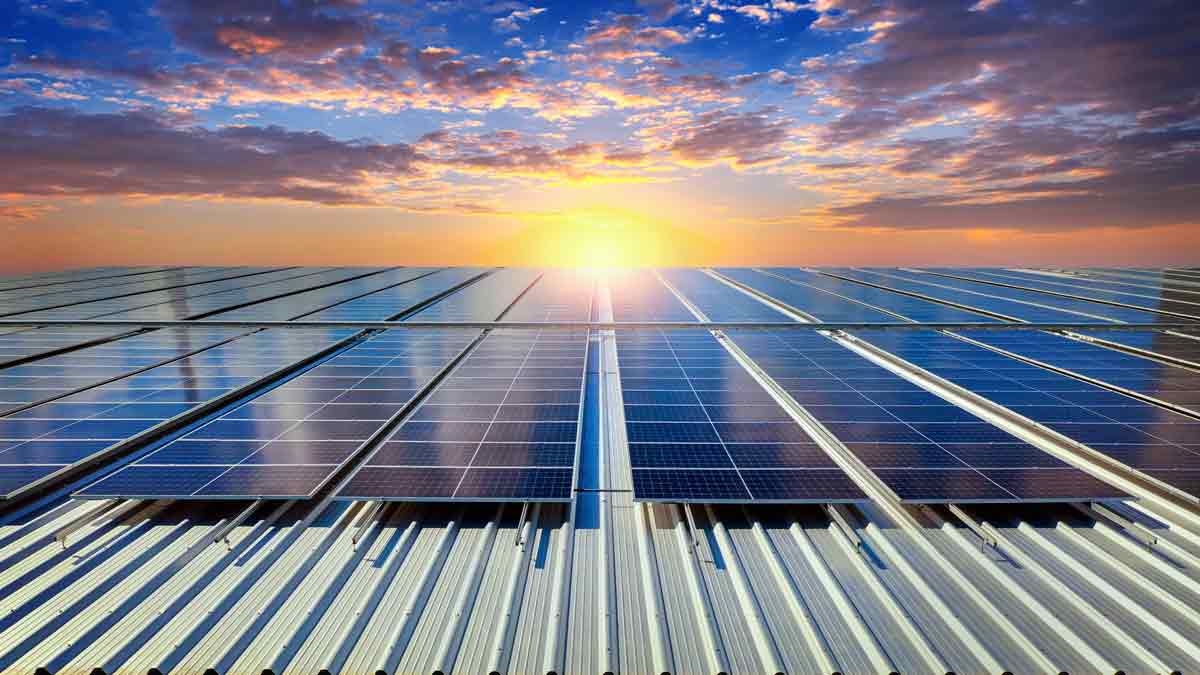
Commercial rooftop solar installation

Rooftop

Mounted on existing roof structures using ballasted or penetrating racking systems. Most commercial rooftops can be retrofitted without structural modifications. Flat roofs are typically ballasted; pitched roofs use rail-and-clamp systems.
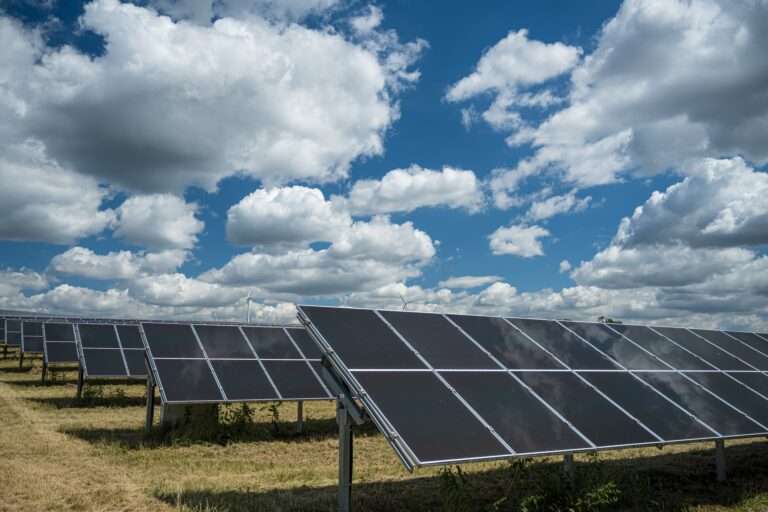
Ground-mounted solar installation

Ground-mounted

Installed on concrete or screw-pile foundations on unused land adjacent to the site. Allows optimal angle and orientation regardless of roof constraints. Particularly suited to agricultural and industrial sites with available land.
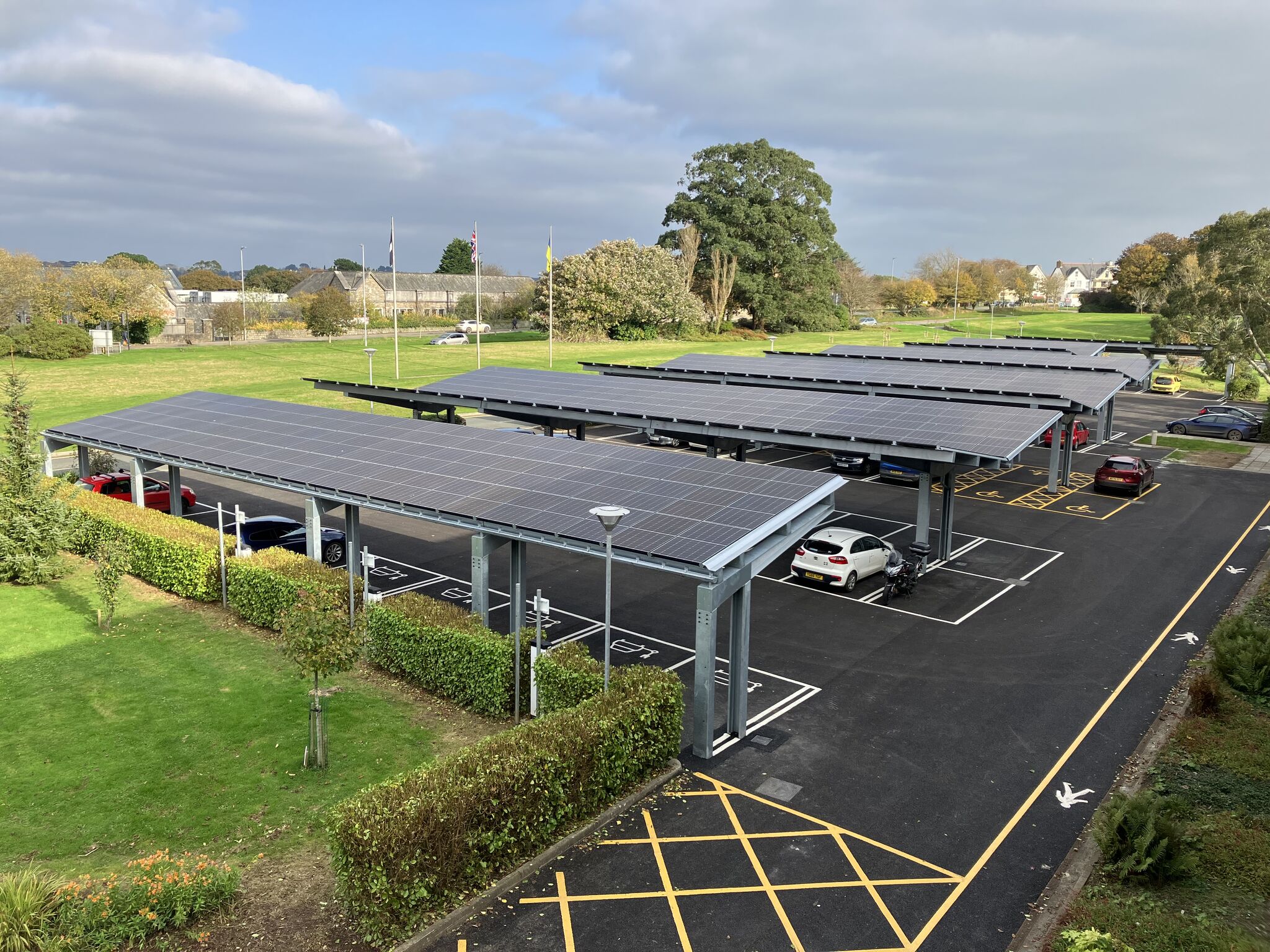
Solar carport installation

Solar carports

Elevated structures covering car parks that support solar panels above. Provide dual benefit of renewable generation and weather protection. Increasingly integrated with EV charging points, supported by OZEV grant funding.

Panel technology

Modern commercial systems use monocrystalline silicon panels, which offer efficiencies of 20–23% and performance warranties of 25–30 years. Bifacial panels — which generate electricity from both sides — offer additional yield on high-albedo surfaces. String inverters remain the most common choice for commercial rooftops; microinverters and power optimisers are used where shading or complex roof geometry requires panel-level optimisation.

Planning and grid connection

Most rooftop commercial solar installations in England, Scotland, and Wales fall within permitted development rights and do not require planning permission. Exceptions include listed buildings, conservation areas, and systems above certain size thresholds. Ground-mounted systems above 1 MWp typically require full planning consent.

Grid connection is required for any system that exports to the network. For systems below 50 kWp, a simple G98 notification to the Distribution Network Operator (DNO) is sufficient. Systems above 50 kWp require a G99 application, which can take 6–26 weeks depending on local network capacity.

Energy Storage

Battery storage

Battery Energy Storage Systems (BESS) are increasingly deployed alongside commercial solar installations, though they are not always required. The business case depends on the site's energy profile, tariff structure, and whether demand management benefits are available.

How it helps

A battery stores surplus solar generation that would otherwise be exported to the grid at low SEG tariff rates. This stored energy is then used during the evening or during grid peak periods, further reducing grid imports. On time-of-use tariffs (such as Agile Octopus or similar half-hourly business tariffs), batteries can also charge during cheap overnight periods and discharge during expensive peak periods — independent of solar generation.

Demand charge reduction

For larger commercial and industrial sites on half-hourly metered supplies, demand charges (based on maximum consumption in any 30-minute period) can form a significant portion of the electricity bill. A battery system programmed to clip peak demand can generate substantial savings that are separate from, and additional to, solar generation savings.

Current technology and costs

Lithium iron phosphate (LFP) chemistry dominates the commercial BESS market, offering a good balance of cycle life (typically 4,000–6,000 cycles), safety, and cost. Installed costs for commercial systems currently range from £350–£550 per kWh of usable capacity, depending on size and specification. The standalone payback on battery storage is typically longer than solar alone — it is most effective when co-located with solar and where demand management savings are available.

Our calculator includes optional battery storage modelling. You can estimate the incremental benefit of adding storage to your solar system based on your site's self-consumption rate and energy profile.
Finance

Funding options

There is no single correct way to fund a commercial solar installation. The right structure depends on the organisation's capital availability, tax position, balance sheet considerations, and appetite for long-term ownership. The four main routes are summarised below.

Structure How it works Best for Key consideration
Outright purchase Business funds the full capital cost. Owns the system and captures all savings and any export revenue from day one. Businesses with available capital seeking maximum long-term return Highest upfront cost; best total return over 25 years
Asset finance / loan System is funded via a business loan or asset finance facility. Repayments are typically covered by the energy savings generated. Businesses that want ownership without large upfront outlay Net cash flow positive from day one is often achievable
Power Purchase Agreement (PPA) A third party funds, owns, and maintains the system. The business buys the electricity generated at a fixed, below-market rate for 10–25 years. Businesses with zero capex requirement; public sector organisations Lower savings than ownership; system reverts or is purchased at end of term
Operating lease Business leases the system for a fixed monthly payment. Treated as an operating expense rather than capital expenditure on the balance sheet. Businesses where off-balance-sheet treatment is required IFRS 16 / FRS 102 accounting treatment should be reviewed with auditors

Tax considerations

UK businesses purchasing solar systems outright or via asset finance benefit from 100% first-year allowances under the Full Expensing regime (for companies) or the Annual Investment Allowance (AIA). This means the full capital cost can be offset against taxable profits in the year of purchase, significantly improving the after-tax economics of outright purchase.

VAT

Commercial solar installations are subject to standard 20% VAT on both equipment and installation. VAT-registered businesses can recover this in the normal way. Our calculator models all figures inclusive and exclusive of VAT where relevant.

Smart Export Guarantee (SEG)

The Smart Export Guarantee requires licensed electricity suppliers with 150,000+ customers to offer tariffs for exported electricity. Rates vary by supplier and tariff type — variable SEG tariffs that track wholesale prices can offer better rates than fixed tariffs during high-price periods. Export revenue is typically a minor component of commercial solar economics, as maximising self-consumption is the primary objective.

Ready to model your site?

Put the figures above to work. Our calculator applies UK-specific irradiance data, real energy prices, and your roof dimensions to produce a detailed financial model.